The Relentlessness of Time: Anticipation, Anxiousness, and Reflection
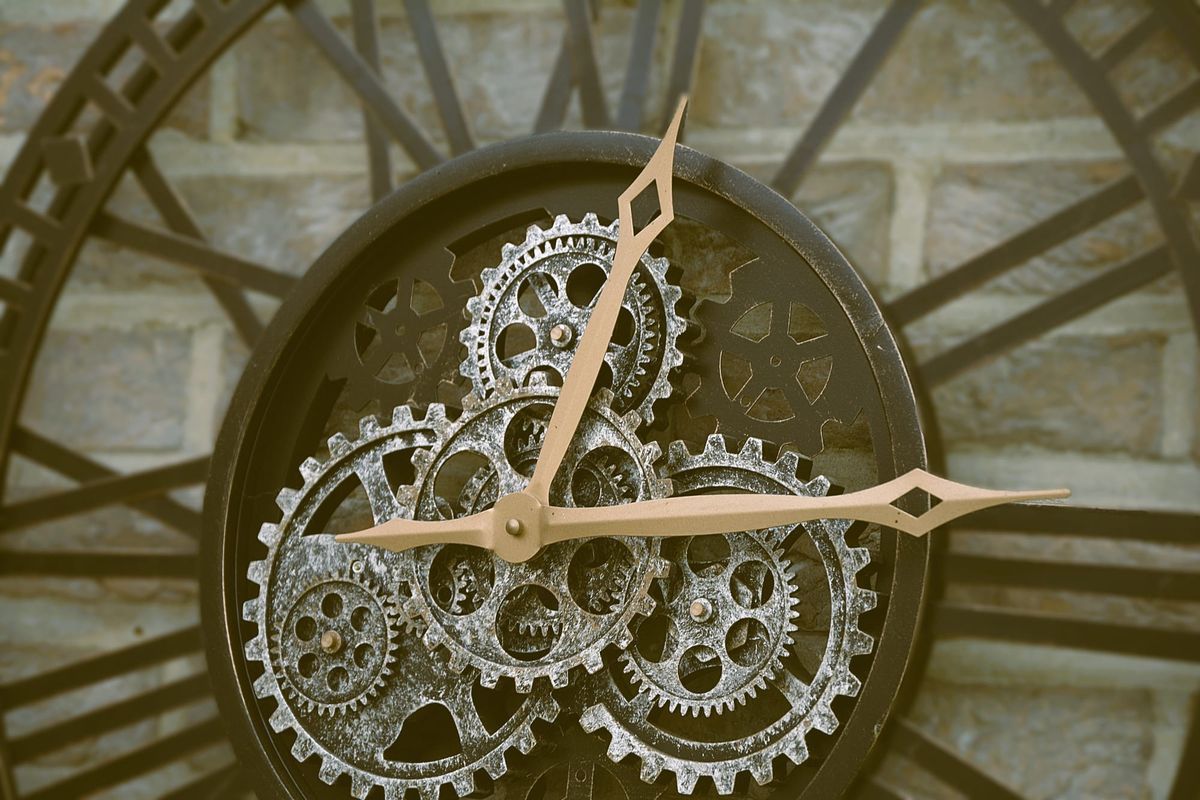
Back in what feels like a completely different era, I was sitting in my third grade classroom daydreaming about how I would achieve my goal of becoming a pilot. I would graduate highschool, skip university, and go straight to attend civilian flight training to become a commercial pilot. After all, I had been infatuated with the idea of flying ever since I visited the San Francisco International Airport on a trip to Hong Kong. However, being snapped back to reality as the teacher called on my name, I slowly came to a realization that it would be nearly a decade later and an insurmountable number of tests before I could possibly achieve my dream. Sitting in the classroom, time seemed to move at a snail’s pace as I glanced at the clock every 2 minutes while the teacher explained subjects such as numerical fractions, cursive writing, and collage art. With little incentive to pay attention, I chatted with my friends about anodyne subjects such as new online games, what we were going to play during recess, and TV shows. After class, I would often clear my mind by playing basketball on the blistering blacktop in the California sun until it was time to attend Chinese school. Life was easy back then. Living day by day, hour by hour, second by second, soaking up everything life threw at me. I was living in the present, but not fully.
Despite this carefree life, there was rarely ever a day when I wasn’t looking towards the future. I vividly remember looking forward to the physical education class in the afternoon while I was dozing off in morning homeroom. I remember looking forward to recess and lunch where I could play basketball or soccer with my friends. I remember looking forward to after school when I could go home to sleep or play games. Why was it that I was always looking forward to something in the future and rarely fully immersed in the present?
It frustrated and disappointed me to find that my expectations often surpassed reality. For example, hoping to play capture the flag during physical education class only to end up stretching for 30 minutes and then running 75-yard dashes for 20 minutes. Similarly, anticipating a scrumptious lunch only to be met with the supposedly healthy “hot lunch” that the school provided which could be classified as a proper kitchen nightmare. The last nail in the coffin was when I hoped to play the latest and greatest online game with my friends only to be thwarted when my home internet decided to go out on a sunny day.
So does this mean anticipation is a negative cognitive function that merely leads to disappointment? I think the answer may require some pondering. If I were to turn to renowned Austrian philosopher, Ludwig Wittgenstein, perhaps I may get some answers. Born in 1889, Wittgenstein was born into a relatively rich family where he grew a passion for philosophy, music, and engineering. Afterwards, he attended the Technical University of Berlin before moving to Cambridge, where he would eventually become a teacher. Deeply entranced with the philosophy of mathematics, the mind, and languages, he published his one and only book: Tractatus Logico-Philosophicus. Despite only having one work published, he kept some private notebooks filled with philosophical prose. Funnily enough, keeping private notebooks may be the only parallel I have with a knowledgeable philosopher. While mine are filled with random thoughts and doodles, Wittenstein’s contained gems of philosophical thought. More specifically on the topic of anticipation, he states, “Only a man who lives not in time but in the present is happy. Time is the enemy of happiness in that both memory and anticipation of the future point to the death that is to come”. Although I was not always thinking about my inevitable death while I anticipated lunch time in the third grade, my act of “living in time” indeed sometimes made me unhappy.
Especially in the last few months of the school year, anticipation would multiply as summer vacation drew near. My brain would be filled with thoughts of the future and drained of thoughts of the present. Rather than focusing on what my teachers were speaking about, all too often I would be imagining the free time and vacations that I would spend with my friends and family. So why does the human mind love to anticipate? If it doesn’t make us happy, then is there another reason?
Maybe Wittgenstein wasn’t completely accurate to say “a man who lives not in time but in the present is happy”. Can anticipation actually produce happiness? As I sat there idly in the stuffy third grade classroom, while my teacher chatted away, I found solace in imagining what I would do in the afternoon. Did I feel happy escaping from my reality?
There have been plenty of scientific studies that attempt to figure out whether a “wandering mind” is positive or negative. In an article in The Atlantic, titled “Buy Experiences, Not things”, written by Journalist and Yale Lecturer James Hamblin, he describes the positive effects of anticipation through a behavioral economic lens. As an aspiring economics major myself, I found a lot of logical sense in his argument between material anticipation and experiential anticipation. For example, we are more likely to feel happier with an experience rather than a possession. While this may be counterintuitive as possessions such as a couch or a phone last much longer compared to a weeklong vacation, the forces of hedonic adaptation and constant exposure slowly deteriorates the worth of tangible items. In economics terms: diminishing marginal utility.
Back in the 4th grade, I begged my mother to buy me a Kendama, a traditional Japanese toy which had a ball attached to a wooden handle with 2 cups and a spike. Similar to beyblades, pokemon cards, and slinkies, the Kendama quickly became a fad at my elementary school. Every second of free time my friends and I had was spent honing our skills on this simple toy. Rather than running to claim a spot on the playground or playing sports on the field, we would stand on the blacktop attempting to perform difficult tricks such as the whirlwind or the lunar. As you can probably tell, my anticipation to receive this toy was insurmountable to the extent where I would feel unhappy during the days it took to ship the package. Once the package finally arrived, I ripped up the brown cardboard box and unboxed the toy. My happiness and excitement couldn’t be contained. As with all fads though, once I actually played around with it for a couple weeks, I slowly lost that same undying feeling of excitement when I picked it up for the first time. Looking back, it frustrates me that I so often tossed things to the side without cherishing them for longer.
Referring back to the article, one piece of evidence that Hamblin cites is a research entry written by Harvard psychologist Killingsworth, Cornell professor Gilovich, and Cornell Doctoral candidate Kumar titled “Waiting for Merlot: Anticipatory Consumption of Experiential and Material Purchases”. In this paper, they explored the modern idea that spending money on experiences creates more “enduring happiness”. More specifically, they focused on anticipation and whether it is a factor in happiness before and after an event. With conclusive evidence, they found out that anticipation certainly has a role in “enduring happiness”. Most people anticipate because there is no better thing to do in the present. As I sat in my 3rd grade classroom, it was more logical to anticipate my summer vacation rather than listening to the teacher as I must have placed the importance of happiness before learning. In the research article, they state, “when you can't live in a moment, they say, it's best to live in anticipation of an experience”. This was exactly what I was attempting to do. I couldn’t live out my summer fantasies during the last months of class so I found comfort in anticipating it instead.
I think many people including myself live through life anticipating, only to be met with dissatisfaction. Regardless of whether you believe anticipation is good, bad, or both, there is an argument to be made that it can be fulfilling. In Maia Szalavitz’s article, “Addicted to Anticipation”, she explains from a neuroscientific standpoint how a 53 year old gambling addict found euphoria from risking her life savings. Although I hope most of us are not gambling addicts, perhaps we share similar traits when we decide to anticipate. Szalavitz goes on to describe how addiction to anticipation is a learning disorder and states, “The high is in expecting an outcome, desiring it, imagining it, not in its fulfillment”. She argues that the end result doesn’t give us that “high” feeling, but rather the steps that lead to it. Now did I really feel “high” in the third grade daydreaming about becoming a pilot and eating lunch? Perhaps not to that extent, but anticipation allowed my mind to race, unlike the things that were being taught in class.
Going back to Wittgenstein’s idea that only living in the present will bring happiness, I think there may be some more truth to that statement. A couple of years ago, I was a junior in high school getting ready to take the standardized tests that would help me get into a university. After spending countless hours on tedious practice tests and reviewing general concepts, I felt pretty confident in my ability to achieve a high score. However, as the days grew nearer and nearer, there was a distasteful feeling festering in the back of my mind. I would consider myself a pretty stress free and carefree person, but there was no denying that there was a lingering sense of nervousness. Now what do they call this feeling? It was no other than the wicked sibling of anticipation: anxiety.
Thinking back to anytime I had an exam, there would always be that speck of anxiety in my head. "Just give me the pieces of paper so I can finish this. I just want this to be over." These were some of the many thoughts that raced through my mind in the minutes right before any exam started. Now that I wrote that down, saying “I just want this to be over” sounds a tad bit grim. However, this was exactly how I felt. Anxiety has a negative connotation because of the emotions it brings upon us such as stress, fear, and uncertainty. If this is the case, then why are humans wired to feel anxiety? After all, according to an article titled “Surviving Anxiety” in The Atlantic written by editor and author Scott Stossel, anxiety related issues are the number one mental disorder in the nation. Furthermore, he states, “anxiety is at once a function of biology and philosophy, body and mind, instinct and reason, personality and culture”. This means that all these different facets of life are affected by the emotion of anxiety. As I sat in that chilly classroom with my runny nose and cold feet, waiting for the teacher to hand out the ridiculously thick packet of questions, there was no doubt that I was feeling anxious. But as I glanced at the first couple of problems, my brain went into autopilot and started bubbling in answers. There was no more anxiety. I was just getting it done. To my surprise, my test scores came out pretty decent despite that nervous feeling I had while waiting. A beautiful quote that Scott cites from writer Jeanette Winterson says, “anxiety remains an unhealed wound that, at times, holds me back and fills me with shame—but it may also be, at the same time, a source of strength and a bestower of certain blessings.” Perhaps that feeling of anxiety during all those exams was secretly a gift of “strength” from my mind to focus up on the task at hand.
So why am I talking about anticipation and anxiety in the first place? Well, there is rarely every a day where I don’t feel at least one of these emotions. We can’t just suppress these two emotions as it is hard wired in our brains. That brings me back to the question: Is it good to feel anticipation and anxiousness? Lately, I’ve had what can only be classified as an episode of existentialism, this unnerving sinking feeling of time passing by. Most days, I wake up in the same bed ready to go to the same classes, meet the same people, and eat the same food. I look forward to what the future holds for me rather than what is happening in the now. I also look into the past, reflecting on nostalgic experiences that can't be relived. In another article in The Atlantic, titled “Is That Nostalgia You’re Feeling”, by writer Kaitlyn Tiffany, she describes how the pandemic has caused people to feel more nostalgia as everybody is binded to their households and forced to wear masks. However, she argues, “the good news is that nostalgia also reinvigorates belief that life has meaning by reminding you of a time when it tangibly did.” According to Tiffany, nostalgia is a powerful emotion in that it enables us to reminisce of a time of “meaning”.
If living in the future and the past is so enticing, how can we live a more meaningful and fulfilling life in the present? Because the truth is, time is the greatest equalizer, and for now, we can’t go back or forward in it. I am not so certain of the answer myself, but as said by Eckhart Tolle, “The present moment is all you ever have”.